A strong backlink profile is critical for SEO success, but not all links are beneficial. Poor-quality, spammy, or toxic links can harm your rankings, while lost or broken links can weaken your site’s authority. Regular link audits help identify these issues and keep your SEO strategy on track.
What Is a Link Audit?
A link audit is a comprehensive review of all backlinks pointing to your website, aimed at evaluating their quality, relevance, and impact on your SEO performance. It involves:
- Spotting spammy or low-quality links;
- Checking for lost or broken links that once provided value;
- Comparing your backlink profile with competitors’;
- Removing harmful links and recovering lost ones;
- Recommending new link-building opportunities.
Without frequent link audits, you risk accruing bad links that might result in Google penalties or missing opportunities to improve your profile.
How Often Should You Audit Your Backlinks?
The frequency of link audits depends on several factors:
1. New or Growing Websites: Every 3–4 Months
If your site is new or rapidly increasing, you are more likely to acquire links quickly. More links increase the likelihood of low-quality or spammy ones creeping in. Auditing every 3-4 months helps identify problems before they harm rankings.
2. Established Websites: Every 6 Months
Older, stable websites with consistent link-building efforts may not need audits as frequently. However, checking every six months ensures no toxic links have accumulated and that your profile remains strong.
3. After Major SEO Changes: Immediately
If you’ve recently:
- Recovered from a Google penalty,
- Migrated to a new domain,
- Experienced a sudden drop in rankings,
- Launched a large-scale link-building campaign,
…then an immediate audit is necessary to assess the impact.
4. High-Risk Industries: Quarterly
Websites in competitive or spam-prone niches (gambling, payday loans, pharmaceuticals) should audit links more often—every 3 months—since toxic links appear more frequently.
5. If You’ve Been Penalized: As Soon as Possible
A manual or algorithmic penalty (like Google’s Penguin update) means harmful links already exist. An urgent audit is required to identify and remove them.
What Happens If You Don’t Audit Links Regularly?
Ignoring backlink health can lead to:
1. The Risk of Google Penalties
Google actively monitors the backlinks pointing to your website. If they detect an excessive number of spammy or low-quality links, your site may face penalties — either through direct manual actions or automatic algorithm adjustments. The frustrating part? Even when these harmful links result from competitor sabotage or negative SEO attacks, the responsibility to fix them falls on you. Recovery is a lengthy process, often taking months of cleaning up your link profile, submitting disavow requests, and waiting for Google to reassess your site’s standing.
2. The Gradual Decline in Rankings
Poor-quality backlinks are more than simply a penalty risk; they gradually erode your website’s trust with search engines. Over time, this loss of trust might result in a progressive reduction in rankings—or, in certain situations, an abrupt drop in visibility.
To make matters worse, if high-quality backlinks disappear (such as when a referring site goes down), your site loses significant authority. Without such strong links, getting back to the top of search results becomes a much more difficult task.
3. Wasting Resources on Useless Links
Here’s the reality check: If you’re not regularly reviewing your backlinks, you might be pouring money down the drain. Many businesses keep investing in guest posts, directory listings, and paid links that never move the needle on their rankings.
A thorough backlink audit cuts through the noise, revealing what’s actually working versus what’s just wasting your time and budget. Ignore this crucial step, and you’re essentially playing roulette with your SEO dollars — except the house always wins.
4. Playing Catch-Up With Competitors
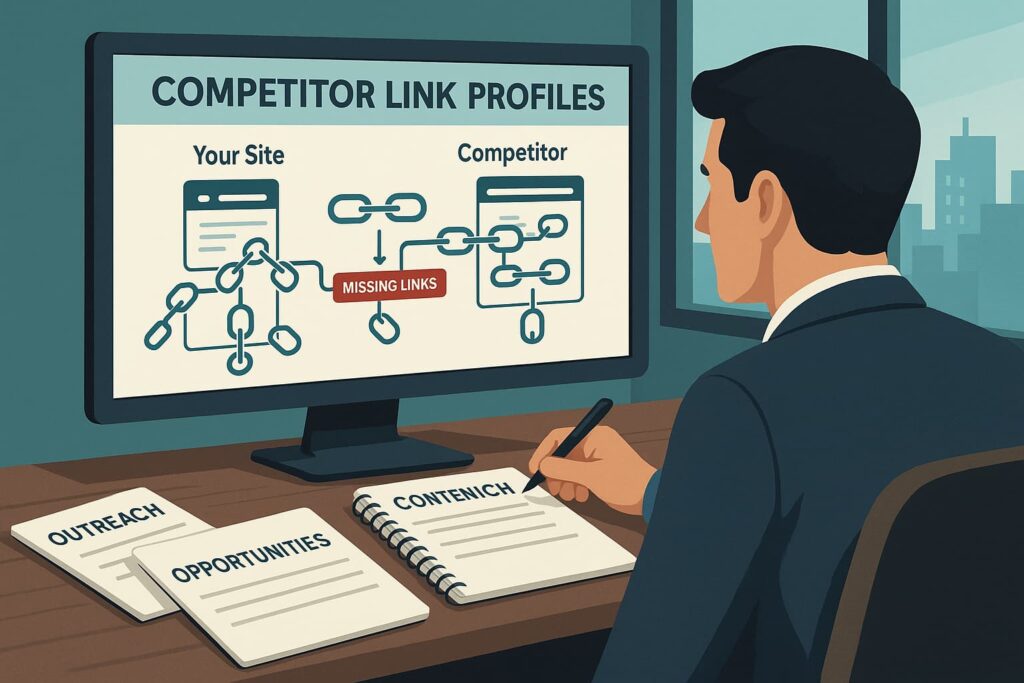
While you’re busy establishing your own connections, competitors are gaining crucial backlinks from authoritative sites you may not even be aware of. Without frequent audits, you will continue to lose out on good opportunities.
An expert audit analyzes the competition’s top backlinks and identifies areas where your site is underperforming. This information allows you to alter your strategy to target comparable high-quality connections, so increasing your site’s trustworthiness and search ranks.
What Does a Professional Link Audit Include?
A professional link audit thoroughly assesses your backlink profile, identifying strengths, problems, and opportunities for development. It takes many stages to evaluate your links’ quality and impact on search rankings.
1. Backlink Scan
A professional backlink audit starts by identifying every link pointing to a website. Specialized tools scan the web to gather a complete list of backlinks from all sources—including blogs, news sites, directories, and social platforms. This comprehensive crawl ensures no referring domains are overlooked, providing a full view of the site’s link profile.
Once collected, the data is categorized by link type, source, and creation date to reveal patterns and trends. This structured approach establishes a clear baseline for analyzing link-building performance over time, helping identify what’s working and what needs improvement.
2. Quality Check
Each backlink undergoes rigorous evaluation based on multiple quality factors:
- Domain Authority – Checks the strength and credibility of the linking site.
- Relevance – Ensures links come from industry-related sources.
- Anchor Text – Spots unnatural or risky anchor patterns.
- Spam Signals – Flags links from suspicious or low-quality domains.
- Placement – Evaluates if the link is in a meaningful content area.
This thorough vetting process separates valuable links from potentially harmful ones that could damage your search rankings.
3. Lost Link Recovery
Valuable backlinks often disappear over time for various reasons, including content removal, site migrations, or expired domains. A professional backlink audit examines the current link profile against historical data to identify these lost connections, paying special attention to high-authority domains that previously contributed to search rankings.
The recovery process involves several approaches. Content updates can reinstate removed mentions, while outreach to webmasters may restore deleted links. Technical corrections address broken links when possible. This procedure restores important link equity that can have positive impacts on search visibility by concentrating on recovering only relevant, high-quality connections.
The most successful recovery tactics prioritize connections with true SEO value above seeking every lost connection. This tailored technique guarantees that only the most useful connections are restored, saving time and effort on low-value links.
4. Competitor Analysis
Ever wonder why some competitors outrank you? Their backlinks often tell the story. A thorough audit doesn’t just look at your links — it studies what your top-ranking competitors are doing right.
You’ll discover:
- Where they’re getting links that you’re missing.
- Content opportunities you haven’t tapped into.
- Potential partnership sources in your industry.
- Their most valuable linking strategies.
This isn’t about copying competitors — it’s about understanding the playing field. When you see which links actually move the needle in your industry, you can focus your efforts on the opportunities that matter most. It’s like getting a roadmap to better rankings.
5. Toxic Link Removal
If the audit reveals harmful or spammy backlinks, it offers a step-by-step procedure for addressing them. First, it identifies which links can be removed by reaching out to the linking site’s webmaster—including detailed instructions for documentation. For links that can’t be removed, the audit flags those that should be disavowed and even prepares the correctly formatted files for search engine submission.
Since disavowing the wrong links could hurt your site’s rankings, this step requires careful evaluation to avoid mistakenly targeting legitimate, high-quality links. The end goal? Safely and systematically removing any backlinks that could be dragging down your search performance.
6. Actionable Recommendations
The audit delivers specific strategies for improving your backlink profile:
- Targeted link-building opportunities — Identifying high-value websites for new links.
- Content development ideas — Suggesting topics likely to attract quality backlinks.
- Anchor text optimization — Guidelines for maintaining natural distribution.
- Outreach strategies — Effective approaches for earning editorial links.
- Risk mitigation — Methods to prevent future toxic link accumulation.
These practical recommendations transform analytical findings into an executable plan for enhancing your site’s authority and search performance.
When Should You Hire a Professional Service?
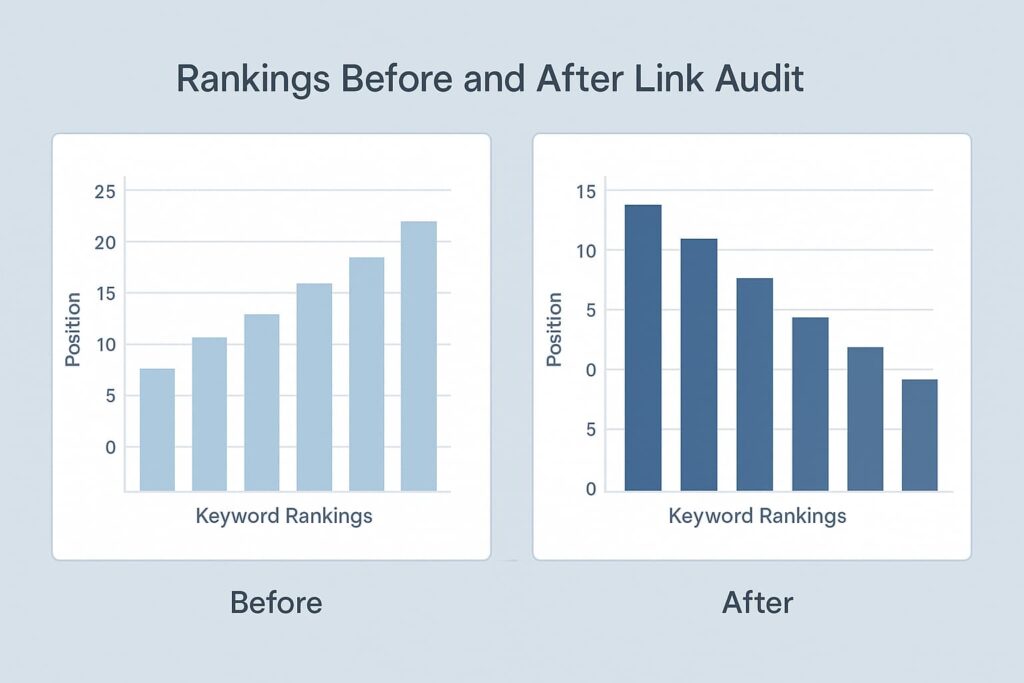
Basic audits using tools like Ahrefs or SEMrush can be helpful, but there are situations where hiring a professional is necessary. Here’s when you should consider expert help:
- Limited Time or Skills – If you’re unsure how to handle disavows or penalties, professionals can safely identify harmful links without risking valuable ones.
- Deep Competitor Research – Experts uncover backlink opportunities that basic tools often overlook.
- Big Sites or Post-Migration – Manual audits help large sites or recently migrated domains avoid ranking losses.
- Competitive Industries – In fields like finance or healthcare, expert audits reduce risk and improve SEO effectiveness.
A professional backlink audit extends well beyond the basic automated reports. You will obtain practical insights into potential Google penalties, questionable link patterns, and a plan tailored to your specific site. Whether you’re losing ranks, entering a competitive industry, or just want to clean up your backlinks, a professional study guarantees that your link profile helps—not hurts—your SEO efforts.
Unlike generic tools, 3XE Digital delivers human-led insights into penalty risks, unnatural patterns, and a strategy crafted for your goals. If your traffic is declining, you’re entering a tough market, or you want to transform backlinks into ranking assets, this audit turns vulnerabilities into advantages.
Conclusion
Regular link audits are essential for maintaining your backlink profile clean and effective. Depending on the age, size, and risk level of your site, audits should be performed every 3-6 months or after major SEO adjustments. Skipping them might result in fines and lost ranks. Professional audits may help you delete unwanted linkages, restore value, and identify competition gaps. Staying proactive helps to maintain a good SEO strategy and secure ranks.